

Grease Cleaning Pros delivers trusted grease trap services for restaurants and commercial kitchens across the United States. We remove accumulated grease, wastewater, and settled material so your unit functions as intended and minimizes downstream risk.
Check Out Grease Trap Pumping

See Details About Grease Trap Pumping

Learn More About Grease Trap Pumping
Our team keeps to routine service cycles and keeps well-documented manifests to support inspections and local compliance. Interior cleaning uses high-pressure water—up to 3,000 psi—as required to bring back performance beyond basic removal.
Choosing a full cleaning instead of a basic visit lowers odor, minimizes plumbing interruptions, and limits surprise shutdowns that hurt a busy kitchen. Grease Cleaning Pros offers scheduled maintenance and fast response when urgent problems arise.
We center on operational outcomes for your business: fewer service calls, strong plumbing protection, and a safer municipal flow by capturing FOG before it reaches the sewer. Contact us to build a reliable plan that keeps your kitchen open and compliant.
Commercial Grease Trap Pumping For Restaurants And Commercial Kitchens
Commercial kitchens need a custom maintenance plan to keep plumbing running smoothly and consistent.
Protect Your Kitchen Plumbing From FOG, Solids, And Wastewater Issues
FOG and trapped food solids are a common cause of drains that slow down and backups in restaurants. Dishwashers send a lot of oil and small food particles into the system, which increases the risk of recurring clogs.
Regular service lowers that risk and helps inspectors confirm recorded compliance. Grease Cleaning Pros aligns frequency to menu, volume, and dishwasher use so maintenance matches actual demand.
Support A Cleaner, Safer, And More Hygienic Back-Of-House Environment
When a unit is overdue, strong odors and slippery floors spread quickly. That creates unsanitary conditions and health exposure for staff.
Scheduled visits function as a proactive hygiene measure. Teams keep focus on service while our technicians manage the trap service and documentation.
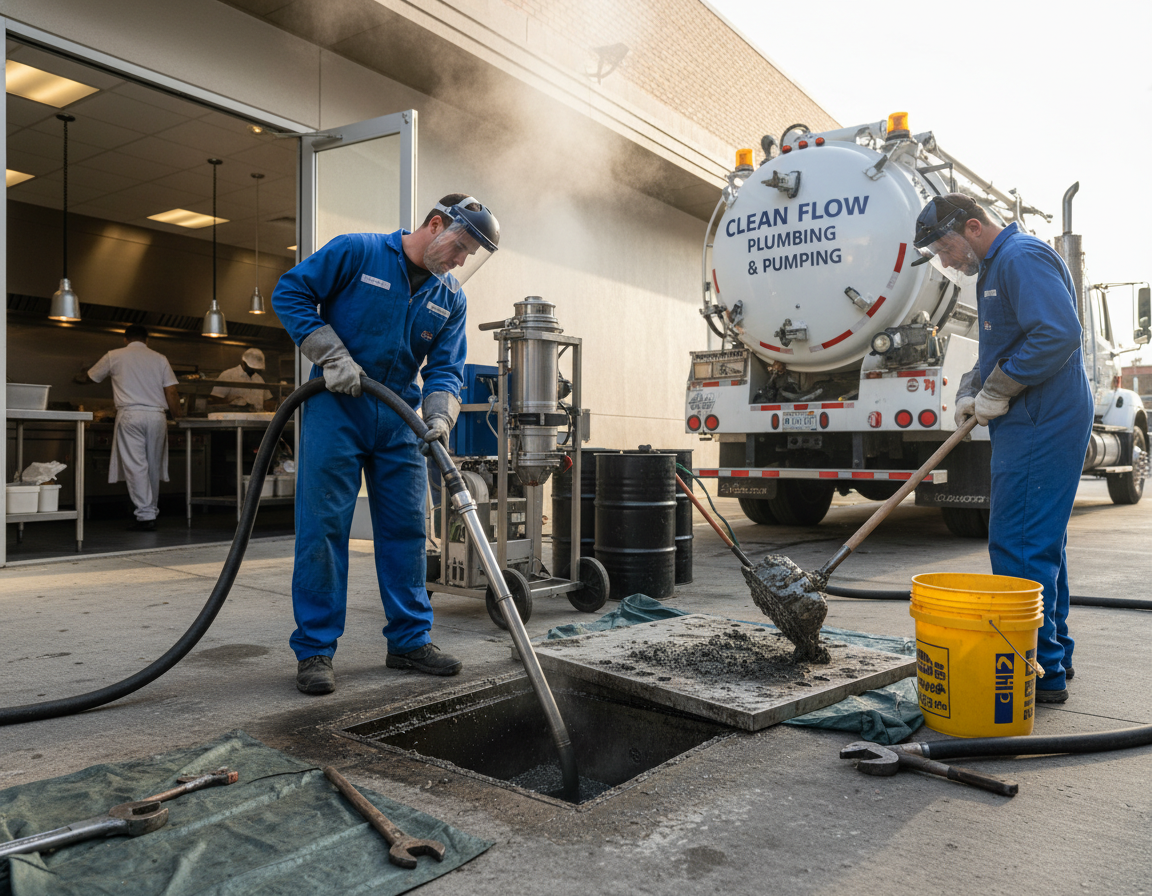
- Less frequent drain interruptions and less frequent emergency calls
- Less odor and slip hazards in the back of house
- Service plans matched to your restaurant’s output
| Factor | Why it matters | Typical service cadence |
|---|---|---|
| Menu type | High-fat menus add more oil load | Monthly to quarterly |
| Dishwasher volume | Sends fine solids into plumbing | Monthly |
| On-site practices | Scraping and strainers lower FOG | Quarterly or as needed |
How A Grease Trap Works In A Modern Kitchen Plumbing System
A properly sized unit reduces wastewater so oils rise and solids sink before water leaves.
How separation happens: Wastewater enters the inlet and slows inside the retention tank. Lighter fats and oil rise to form a top layer while heavier solids settle to the bottom. The cleaner mid-layer is what should exit through the outlet.
Baffles and internal guides create a controlled path through the unit. This slowed flow and guided route increase retention time so floating material has time to rise. Proper retention stops floating material from reaching the outlet and moving into downstream plumbing.
What leaves the unit should be primarily pre-treated water with a significant amount of FOG removed. When the wrong material passes through, it can harden and cling inside sewer lines, causing blockages and backups that impact operations.
- Inlet: receives wastewater
- Baffle: manages flow and blocks pass-through
- Retention tank: creates three zones (top layer, middle water, bottom solids)
- Outlet: discharges the treated effluent
Consistent service by Grease Cleaning Pros brings back tank capacity so separation works as designed. That defends your kitchen plumbing and lowers the risk of costly sewer problems.
Grease Trap Cleaning Vs. Pumping: What Your Service Actually Includes
A clear explanation of what a full service covers helps kitchen managers review quotes and avoid surprise fees.
Grease Cleaning Pros distinguishes the two stages so customers know what to expect on each job.
Evacuation First, Then Interior Cleaning For Better Results
Pumping is the evacuation of liquid and solids from the unit. Cleaning means rinsing interior walls, baffles, and lids so residual material does not remain attached.
We pump out contents first to improve access and access. Removing liquids and solids makes the wash step quicker, less messy, and less disruptive to kitchen operations.
Why High-Pressure Water Cleaning Matters
A dried ring often remains after a pump-only visit. This hardened layer shrinks capacity and can build between services.
Professional technicians use high-pressure water—up to 3,000 psi—to strip away stuck-on material. Follow-up washing can make the unit look nearly new and reduce the return of buildup.
“Complete cleaning—not only removal—is the most effective way to cut odors and repeat blockages.”
| Step | What it covers | Operational benefit |
|---|---|---|
| Evacuation | Remove liquids and settled solids | Improves access for cleaning |
| Interior wash | High-pressure water cleans walls and baffles | Reduces odors and residual layers |
| Verification | Inspect and document results | Clear expectations for next service |
Opting for full trap cleaning over pump-only helps clean grease from problem areas and protects long-term plumbing performance.
Our Grease Trap Service Process At Grease Cleaning Pros
Each service visit from Grease Cleaning Pros starts with a safety and access review to speed work and limit disruption. We use a repeatable checklist so customers know what to expect and inspectors get well-organized records.
Pre-Service Site Check
We verify access points, inspect lids and record site conditions. Our team calls out anything that could affect a safe, complete job.
Full Evacuation
We remove accumulated grease, wastewater, and settled solids to restore the unit’s usable volume. This step readies the unit for thorough cleaning and lowers the chance of pass-through to downstream lines.
Interior Wash-Down
When needed, technicians use professional methods including high-pressure water to remove the stubborn layer and lower odors. This cleaning step boosts separation performance.
Verification And Records
We verify component placement and check for signs of pass-through. Grease Cleaning Pros provides manifests, logs the last service date, and keeps customer records to support regulations and inspections.
Routine Grease Trap Maintenance Cycles That Keep You Open And Operating
A steady maintenance schedule is one of the simplest ways to avoid costly downtime in a busy kitchen.
Why Many Jurisdictions Enforce A 90-Day Window
Across much of the United States, rules require a service interval near 90 days. These limits reduce sewer risk and help inspectors confirm compliance.
Falling behind on a required date can mean fines or forced closures. Staying on schedule protects both revenue and reputation.
The 30% Rule And When To Schedule Service
A straightforward measure drives decisions: when grease reaches about 30% of the liquid layer, schedule cleaning promptly—even if the calendar suggests there’s still time remaining.
This rule prevents pass-through, protects downstream lines, and keeps the unit working as designed.
Adjust Frequency To Your Menu And Volume
Oil-heavy menus, banquet-style service, or heavy dishwasher use will fill units faster. Bump up maintenance for fried-food or busy restaurants to prevent issues.
Dishwashers And Best-Practice Habits
Dishwashers often send the most FOG into the system. Scraping plates and using sink strainers cut solids up front, reducing what reaches the interceptor.
Train staff to remove food and catch particles before they travel. Small habits reduce service needs, slow buildup, and increase time between visits.
How Grease Cleaning Pros Helps
Grease Cleaning Pros reviews your output, looks at real kitchen load, and builds a realistic schedule that fits local rules and your operational needs.
We set reminders, provide manifests, and fine-tune service as your kitchen changes so you stay running and compliant.
Grease Trap Types We Service Across The United States
Not every unit under a sink works the same; identifying the model determines service steps and schedules. Correct identification helps set the proper method and frequency so your kitchen stays within requirements and open.
Passive Under-Sink Units
These small, indoor units sit beneath sinks. They have limited capacity and often need more frequent attention. They’re common in compact food operations and bars.
Hydromechanical Interceptors
Compact systems use baffles and flow control to improve separation in a smaller footprint. These are efficient for mid-range output and fit within or near the kitchen.
Gravity Interceptors
Large outdoor tanks—often 1,000+ gallon—provide greater retention time and serve busy kitchens. They usually follow a 90-day cycle, but schedules change based on actual load and menu needs.
Automatic Recovery Units
These systems heat and move oil into an external container. Cleaning focuses more on collection handling and different access points than smaller tanks. Regular service prevents operational issues and cuts manual handling.
Grease Cleaning Pros can service these different traps across the United States and align work to each system’s design and needs. Our approach is based on proven methods refined over years in commercial plumbing environments.
| Type | Typical location | Service note | Typical cadence |
|---|---|---|---|
| Passive under-sink | Inside, under sink | Smaller capacity; frequent checks | Monthly to quarterly |
| Hydromechanical | Indoor/near kitchen | Baffles + flow control; compact | Quarterly |
| Gravity interceptor | Outdoor, large tank | High volume; longer retention | 90 days or load-based |
| Automatic recovery unit | Indoor with external container | Heats and transfers oil; special handling | Collection-based checks |
Common Grease Trap Problems We Help Solve Fast
A quick, steady response to warning signs keeps small issues from turning into business-threatening events.
Slow Drains, Foul Odors, And Recurring Clogs
Slow drains, persistent odors, and clogs that come back after a basic clearing are the main warning signs your unit is overdue. These symptoms often show up first at sinks and dishwashers.
Dealing with them early keeps staff focused on service and reduces the chance of an unexpected shutdown.
Sewage Backups And Emergency Risks
Left unchecked, backups can escalate into an emergency that forces a kitchen to close. That harms customer service and hits daily revenue.
Fast response minimizes sanitation exposure and lowers cleanup and repair costs.
Pass-Through And Sample Well Evidence
When oily material appears in a sample well or downstream manhole, it signals pass-through. That means the unit is overloaded or not separating water and oil properly.
When Symptoms Point To Broader Plumbing Problems
Not every symptom is a trap problem. Restrictions downstream, collapsed lines, or damaged flow controls can appear as trap failures.
Grease Cleaning Pros assesses the issue and recommends the fastest fix—whether that is a focused grease trap cleaning, line service, or a plumbing repair—to protect your staff and business.
“Treating the entire waste pathway from fixture to main line reduces repeat calls and keeps kitchens open.”
Emergency Grease Trap Services With Rapid Response
When a kitchen faces an urgent blockage, every minute off the line can cost seats and reputation.
When Every Minute Counts For Customer Service And Revenue
An emergency includes overflowing fixtures, sudden strong odors, backups at sinks, or any condition that threatens a shutdown during peak service. These events immediately affect covers, canceled orders, and staff workflow.
Our team prioritizes fast stabilization to restore basic kitchen function. We assess risk on arrival, stop further discharge, and clear the immediate obstruction so staff can resume service.
After-Hours And Weekend Scheduling To Minimize Disruption
Grease Cleaning Pros offers flexible windows and after-hours visits to avoid busy shifts. For customers on a service cycle, 24/7 response is available so problems get handled without a daytime shutdown.
- What we consider an emergency: backups, overflows, sudden odors, or a unit that risks closure
- Business impact: downtime means lost revenue, canceled covers, and potential health inspections
- How we communicate: clear arrival windows, on-site updates, and next-step guidance
Staying on a routine cycle reduces emergency calls. Regular service reduces the chance of unplanned closures and keeps operations steady.
Health Department And Local Grease Trap Regulations: Staying Compliant
Clear records often decide whether an inspection becomes a quick check or an enforcement action.
What inspectors look for: most health officers ask to see manifests and the last service date. Presenting a stamped manifest proves recent work and prevents follow-up questions.
Why Manifests And Service Dates Matter
If the last recorded grease trap pumping date falls outside the local window—often near 90 days—inspectors may issue a short deadline to correct it. That can mean fines or an order to schedule immediate work.
How Consistent Recordkeeping Helps
Organized logs reduce stress when staff turnover or misplaced paperwork makes answers hard to find. Digital manifests and clear labels make audits quicker and more straightforward.
Plan Ahead To Avoid Fines
Proactive scheduling keeps you inside regulations and limits last-minute disruption. Grease Cleaning Pros keeps manifests, communicates upcoming dates, and helps coordinate with local health offices so your job stays on record and compliant.
FOG Waste Disposal Done The Right Way
After removal, the way we handle FOG and solids matters as much as the service itself. Proper end-to-end handling keeps local sewers and treatment plants functioning and minimizes compliance risk for your business.
Responsible Handling Of Fats, Oils, Grease, And Solids
What comes out during service is a mix of fats, oils, grease, wastewater, and settled solids. Each stream needs documented transport and proper disposal to meet local rules.
Why Professional Disposal Helps Protect Municipal Systems
Improper disposal can cause hardened deposits in downstream lines and stress wastewater plants. That leads to blockages, fines, and community harm.
- We gather and label removed waste for compliant transport.
- Licensed disposal helps prevent contamination of the water system.
- Complete manifests and receipts make inspections fast and clear.
Grease Cleaning Pros treats disposal as part of the job. Our documented, professional approach protects municipal infrastructure and your restaurant’s reputation.
Why Businesses Choose Grease Cleaning Pros For Professional Grease Trap Services
Reliable service begins with people who know restaurant rhythms and the paperwork that keeps inspections simple. Grease Cleaning Pros builds a predictable plan so managers and staff can focus on customers and food, not emergency calls.
Experienced Team And Consistent Quality
Our technicians follow repeatable checklists developed over years of field work. This minimizes missed steps and keeps cleaning outcomes consistent across locations.
Service Designed For Busy Kitchens
We schedule around prep and rush times, tailoring maintenance to menu and volume. That keeps high-traffic kitchens open and lowers surprise downtime.
Clear Communication And Customer-First Reliability
Grease Cleaning Pros documents each visit and shares manifests so compliance is easy. We also identify when a visible issue is actually a plumbing or flow problem and recommend the correct fix.
“Consistent arrivals, clear scope, and trained technicians protect operations and reduce emergency calls.”
Choose a partner that meets operational needs, protects staff workflow, and delivers dependable trap services so your business stays running.
Schedule Grease Trap Pumping With Grease Cleaning Pros Today
Contact Grease Cleaning Pros to secure a service plan that keeps your kitchen running. We schedule grease trap pumping and set a maintenance cycle based on menu, volume, and local rules so inspections and operations stay on track.
Tell us the trap location, approximate size, last service date, and any current problems such as odors or slow drains. That information speeds arrival and helps technicians bring the right gear for trap cleaning and interior cleaning when needed.
If time matters, request our emergency response to minimize lost covers and revenue. Proactive service prevents downstream plumbing issues, cuts FOG-related problems, and makes health inspections smoother.
Ready to book? Call or request a quote today and our team will confirm timing, documentation, and a work plan that supports your staff and business with dependable, professional service.
FAQ
What Do Professional Grease Trap Services Include?
How Often Should A Commercial Kitchen Schedule Maintenance?
What’s The Difference Between Cleaning And Pump-Out?
Can Routine Maintenance Prevent Sewer Backups And Fines?
What Types Of Interceptors And Systems Do You Service?
How Do Dishwashers Affect Unit Performance?
What Signs Indicate An Emergency Service Is Needed?
How Should FOG Waste Be Disposed Of After Service?
Will Cleaning Reduce Lingering Odors In My Kitchen?
What Documentation Should I Expect After A Service Visit?
How Do I Know If A Problem Is The Interceptor Or The Plumbing?
Can Automatic Recovery Units Change Cleaning Needs?
What Best Practices Reduce The Need For Frequent Service?
Are Emergency After-Hours Services Available To Avoid Downtime?
Related: This Reference About Grease Cleaning And Pumping And Plumbing Health


